
My husband, Bruce, is currently wearing a continuous glucose monitor (CGM). And he is not a diabetic. Not even close. But I am. Type 1. When I told my endocrinologist that Bruce would like to know what it’s like to be a diabetic, Dr. Rob gave him a continuous glucose monitor to try out for 15 days. What Bruce wants to experience is what I, as a diabetic, go through wearing one of these devices. Crazy sweet, I know. He’s a keeper. He’s been amazed by the lessons a continuous glucose monitor can teach you about your body, even if you’re not a diabetic and he has encouraged me to share some of this with you. So here goes…
What Is A Continuous Glucose Monitor?
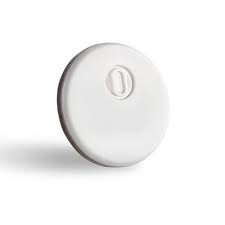
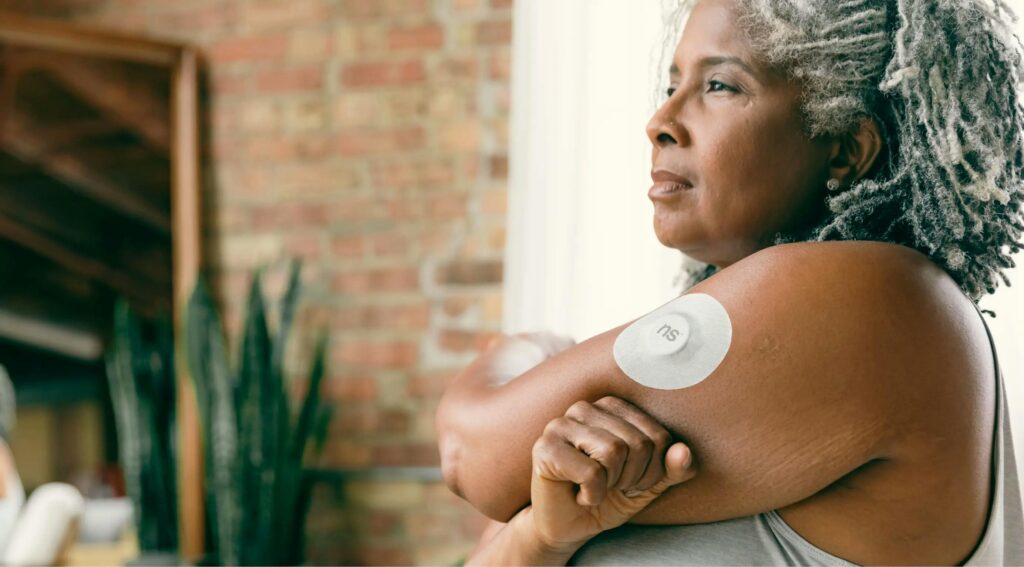
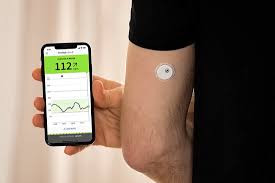
Maybe you’re asking yourself right now, what exactly is a continuous glucose monitor (CGM)? A CGM is wearable technology that tracks your glucose (sugar) levels over time. It measures the glucose level in the interstitial fluid just under your skin 24 hours a day while you’re wearing the device. It allows diabetics to forgo a lot of the finger stick blood tests that were needed constantly before these devices came along. Mine is about the size and thickness of a quarter. I wear on the back of my arm and it “talks” constantly to my phone, where I get the readings. These readings can also be shared with anyone you choose, on their phone, so they can monitor your levels too.
Normal glucose readings are between 70-180. Low blood sugar is below 70 and high above 180. Diabetics get the information from these devices and adjust food and insulin accordingly. And insulin helps them to process food for energy and keeps their bodies functioning. In non-diabetics the body automatically responds to food intake by producing insulin. No CGMs or insulin pens/pumps needed.
Lessons a Continuous Glucose Monitor Can Teach Non-Diabetics
The other day, while I was at Consignments Ltd., Bruce ate half a donut cake. I do not recommend this, but admit I was slightly jealous. Consuming this monstrosity is basically the equivalent of eating 37 packets of sugar in one sitting.What did this do to Bruce’s blood sugar? Pretty much nothing. His CGM went up to 158 (a number within normal range) only to go back down shortly thereafter. His body responded to this carb load by producing insulin to turn the calories into energy. And he and I watched it respond on our phones.
Lesson One:
The reason Bruce got such a quick response from his body is one of the first lessons from the continuous glucose monitor and it’s not to eat more donut cake. It’s to drink more water (see below). After devouring the cake and watching his number start to climb, he remembered what I always do when my sugars start to go higher. I drink water. Yup. You read that right. Water helps the body filter sugar out through your kidneys, for diabetics and non-diabetics alike.
Lesson Two:
The other thing Bruce did after the great donut cake incident of 2026 was to get moving. And that’s the second lesson. Along with water, moving your body, going for a walk, going up and down the stairs a few times, etc. helps to decrease your glucose levels too. According to UCLA Health, “even a five-minute walk after eating a meal ha(s) a measurable effect on moderating blood sugar levels.”
Lesson Three:
Your body is pretty freakin’ amazing! Bruce sees my numbers on the daily. He sees me wear the monitor and he sees what food and insulin do to those numbers. Sometimes the same food and the same amount of insulin do different things. One of my doctor’s calls it the “Chaotic disease.” Wearing the monitor has shown Bruce that if you are lucky enough to not be a diabetic, you are lucky enough. Because this machine we call our body is something to marvel at when it works properly. It’s helped him to understand me (and sometimes my utter frustration with the disease) but it’s also helped him to appreciate his functioning body even more. Now that’s the best lesson of all!
For more information about diabetes, check out The American Diabetes Association website. And for more on health from me, check out: Health Benefits of Drinking More Water, My Reasons to Be Grateful and I Guess I’m A Runner Now.




No Comments